


Apple Launches Faster Mac mini with M6 and M5 Pro: India Price, Full Specifications and What Has Changed
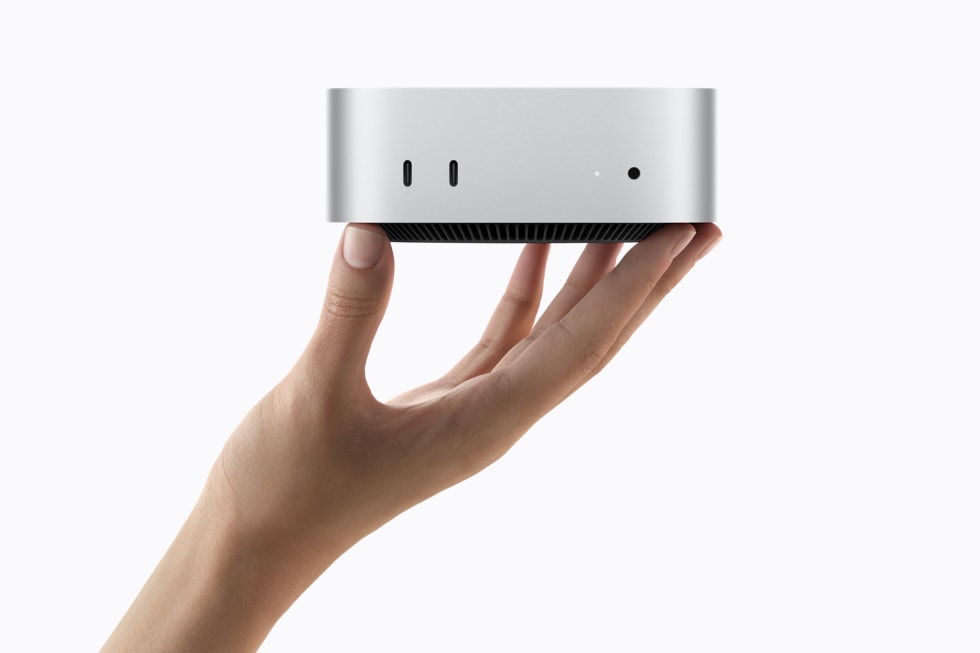
Apple has refreshed its smallest desktop computer, and this time the biggest change is not its size. The new Mac mini looks familiar from the outside, but inside it moves to the all-new M6 chip for mainstream users and the more powerful M5 Pro for professionals. The update focuses heavily on on-device artificial intelligence, faster graphics, quicker storage and modern connectivity.
Apple is also presenting the Mac mini as an always-on computer for AI agents. In simple terms, that means the machine can remain on a desk and continuously run local automation, coding assistants, research tools or private AI models without depending entirely on a cloud service. That sounds ambitious, but the practical value will still depend on the apps and AI models a person actually uses.
The launch in one minute
What is actually new in the 2026 Mac mini?
The outer design is largely unchanged. Apple is using the same compact square body introduced with the previous generation, measuring roughly 12.7 cm by 12.7 cm. It remains small enough to sit beside a monitor, hide under a desk shelf or be installed in a compact office setup.
Most of the work has happened inside. The standard model receives the M6, Apple’s first chip made using a 2-nanometre manufacturing process. The higher-end model uses M5 Pro, which offers more CPU and GPU cores, substantially higher memory bandwidth, larger memory options and Thunderbolt 5.
M6 Mac mini: the main upgrade for most buyers
The M6 chip has a 12-core CPU made up of two “super” cores, four performance cores and six efficiency cores. It also has a 12-core GPU, with a Neural Accelerator built into every GPU core. Alongside that is Apple’s new Dual 16-core Neural Engine, which is designed to accelerate machine-learning and AI tasks.
The base M6 Mac mini includes 16GB of unified memory and 256GB of storage. Memory can be configured to 24GB or 32GB, while storage can go up to 2TB. Memory bandwidth reaches 170GB/s, giving the CPU, GPU and AI engines faster access to the same pool of data.
According to Apple’s own testing, the M6 model can deliver up to 40 per cent faster CPU performance, twice the graphics performance and up to four times the AI performance of the M4 Mac mini. Apple also says storage performance can be up to twice as fast. These figures are based on selected tests and configurations, so real results will vary from one app to another.
Where the M6 improvement should feel noticeable
Everyday apps should open and respond quickly, but the bigger gains are likely to appear when compiling code, editing large photos, exporting video, playing games with ray tracing, processing local language models or running several demanding apps together. The faster SSD should also help with large project files and application loading.
M5 Pro Mac mini: made for heavier professional work
The M5 Pro version starts with a 15-core CPU, 16-core GPU, 24GB of unified memory and 512GB of storage. It can be configured with an 18-core CPU and 20-core GPU, up to 64GB of memory and as much as 8TB of storage.
Its 307GB/s memory bandwidth is one of the most important differences. Higher bandwidth allows the processor to move large amounts of data quickly, which matters when working with complex 3D scenes, high-resolution video, large code projects, scientific datasets and local AI models. It also uses Thunderbolt 5, which can reach transfer speeds of up to 120Gbps with compatible devices.
Apple says the M5 Pro Mac mini can process prompts in LM Studio up to four times faster than the M4 Pro model, render ray-traced scenes in Blender up to 1.4 times faster and process images in Affinity up to 1.5 times faster. Again, these are Apple’s laboratory comparisons rather than independent review results.
M6 versus M5 Pro: complete comparison
| Feature | Mac mini with M6 | Mac mini with M5 Pro |
|---|---|---|
| CPU | 12 cores | 15 cores; configurable to 18 |
| GPU | 12 cores | 16 cores; configurable to 20 |
| Neural hardware | Dual 16-core Neural Engine and GPU Neural Accelerators | 16-core Neural Engine and GPU Neural Accelerators |
| Unified memory | 16GB standard; up to 32GB | 24GB standard; up to 64GB |
| Memory bandwidth | Up to 170GB/s | 307GB/s |
| Storage | 256GB standard; up to 2TB | 512GB standard; up to 8TB |
| Rear Thunderbolt ports | Three Thunderbolt 4 ports | Three Thunderbolt 5 ports |
| External displays | Up to three | Up to three |
| Starting price in India | ₹99,900 | ₹2,09,900 |
What “agentic computing” means in normal language
Apple repeatedly uses the term “agentic” for this Mac mini generation. An AI agent is software that can complete a series of connected steps rather than answering only one question. For example, an agent could watch a project folder, sort new documents, create summaries, update a database and send a report when the work is complete.
Running these tasks locally can reduce delays and keep more data on the computer. It may also help developers avoid sending every prompt or file to a cloud server. The M6 model should be suitable for smaller and medium-sized local models, while the M5 Pro’s larger memory pool and higher bandwidth make it better suited to heavier models and longer-running professional workflows.
Ports and connectivity receive a meaningful upgrade
Both Mac mini versions now support Wi-Fi 7 and Bluetooth 6. Apple has also upgraded the standard wired connection from 1Gb Ethernet to 2.5Gb Ethernet, while a 10Gb Ethernet configuration remains available for studios, servers and offices that move very large files over a local network.
The front includes two USB-C ports with USB 3 speeds and a 3.5 mm headphone jack. On the back, both models have HDMI and Ethernet. The M6 version has three Thunderbolt 4 ports, while the M5 Pro version has three Thunderbolt 5 ports. Both support as many as three external displays, although the exact resolution and refresh-rate combinations differ.
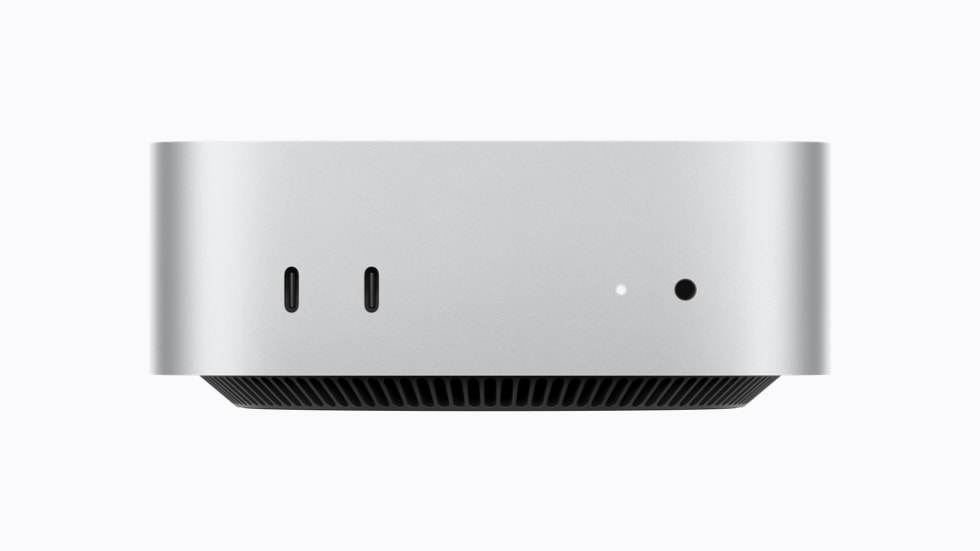

One limitation remains: there are no USB-A ports. Owners of older hard drives, keyboards, audio equipment or other accessories may need an adapter or hub.
macOS 27, Apple Intelligence and Siri AI
The new Mac mini is designed for macOS 27 Golden Gate. Apple says the update will bring a more capable Siri, deeper Apple Intelligence features, improved Shortcuts automation, smarter photo tools and changes across Safari and the wider system.
Siri AI is expected to use personal context from information such as messages, emails and photos, answer questions about content visible on the screen and perform actions across apps. Apple is also integrating Siri into Spotlight and system-wide context menus.
Some of these features are still being tested and may initially be limited by region, language or software version. Buyers in India should check the final language and feature availability rather than assuming every announced function will be present on the first day.
Mac mini M6 and M5 Pro India price and availability
| Model | Standard price | Education price | Starting configuration |
|---|---|---|---|
| Mac mini with M6 | ₹99,900 | ₹88,900 | 16GB memory, 256GB SSD |
| Mac mini with M5 Pro | ₹2,09,900 | ₹1,97,900 | 24GB memory, 512GB SSD |
Pre-orders opened on 25 August 2026. Apple says deliveries and in-store availability will begin on 22 September through Apple Stores and authorised resellers.
The Mac mini box includes the computer and its power lead. A display, keyboard and mouse or trackpad must be purchased separately or reused from an existing setup. That is important when comparing its price with an all-in-one desktop or a laptop.
Which Mac mini should you buy?
Choose the M6 model when
You need a fast home or office desktop, study computer, programming machine, photo workstation or capable video-editing system. It is also the more sensible entry point for experimenting with local AI without paying for professional-level memory and graphics.
Choose the M5 Pro model when
Your income depends on demanding workloads such as large Xcode projects, 3D rendering, visual effects, professional audio, multi-stream high-resolution video, scientific computing or larger local AI models. Thunderbolt 5 and the 64GB memory option also matter here.
For Intel or M1 Mac mini owners
This is a substantial upgrade. The jump in CPU speed, graphics, memory bandwidth, media processing and connectivity should be easy to notice, especially in modern creative and development software.
For M2 or M2 Pro owners
The improvement is meaningful, but upgrading makes the most sense when your current system is running out of memory, storage or graphics performance. The faster network connection and improved AI hardware may also justify the move for specialised work.
For M4 or M4 Pro owners
Most people can wait. The M6 is faster, but the M4 generation is still recent and capable. An upgrade is easier to justify for buyers who specifically need the new AI performance, faster storage, Wi-Fi 7, 2.5Gb Ethernet or a higher-end M5 Pro configuration.
Important limitations before buying
256GB is still small: The base M6 SSD may fill quickly once large applications, photos, videos and AI models are installed.
Memory and storage cannot be upgraded later: Choose the configuration carefully because both are integrated into the system.
No display or input devices: The attractive starting price does not include a monitor, keyboard or mouse.
No USB-A: Older accessories may require adapters.
AI claims need independent testing: Apple’s figures are useful for direction, but real performance depends on the exact model, application and workload.
Apple also launched a new Mac Studio
The Mac mini was announced alongside a refreshed Mac Studio with M5 Max and M5 Ultra. In India, the Mac Studio starts at ₹2,79,900 with M5 Max and ₹6,29,900 with M5 Ultra. It is intended for users who need far more GPU power, memory and expansion capacity than the Mac mini can provide.
The top M5 Ultra configuration reaches a 36-core CPU, 80-core GPU and up to 512GB of unified memory. That makes it a specialised workstation for large AI models, visual effects, 3D rendering, high-end video production and scientific work—not a direct replacement for the much more affordable Mac mini.
Final verdict
The 2026 Mac mini is a performance-focused update rather than a redesign. That is not a bad thing: the current body is already compact, practical and easy to place on almost any desk. The meaningful improvements are the M6 chip, stronger local-AI hardware, faster storage, Wi-Fi 7, Bluetooth 6 and standard 2.5Gb Ethernet.
For most buyers, the M6 model is the one to consider. It offers a strong balance of speed, efficiency and size, although the 256GB base storage remains restrictive. The M5 Pro version is far more expensive, but it serves a clear audience: professionals who will actually use its additional CPU and GPU cores, higher memory bandwidth, Thunderbolt 5 and larger memory options.
Apple’s AI language is prominent, but the Mac mini does not need AI hype to be interesting. It is still one of the simplest ways to get a powerful macOS desktop in a very small form. The new chips make that basic idea faster and more capable than before.
Frequently asked questions
What is the Mac mini M6 price in India?
The Mac mini with M6 starts at ₹99,900. Apple’s education price starts at ₹88,900 for eligible buyers.
When will the new Mac mini go on sale?
Pre-orders are open, and deliveries plus retail availability are scheduled to begin on 22 September 2026.
Is M6 faster than M5 Pro?
M6 is the newer mainstream chip, but M5 Pro has more CPU and GPU cores, more memory, higher bandwidth and Thunderbolt 5. M6 is ideal for most everyday and creative work; M5 Pro is better for sustained professional workloads.
Does the Mac mini include a monitor and keyboard?
No. The box includes the Mac mini and its power lead. A display, keyboard and pointing device are sold separately.
Can the M6 Mac mini run AI models locally?
Yes. Its GPU Neural Accelerators, Dual 16-core Neural Engine and up to 32GB of unified memory are designed to support on-device AI. The size and speed of a model will depend on available memory and software optimisation.
